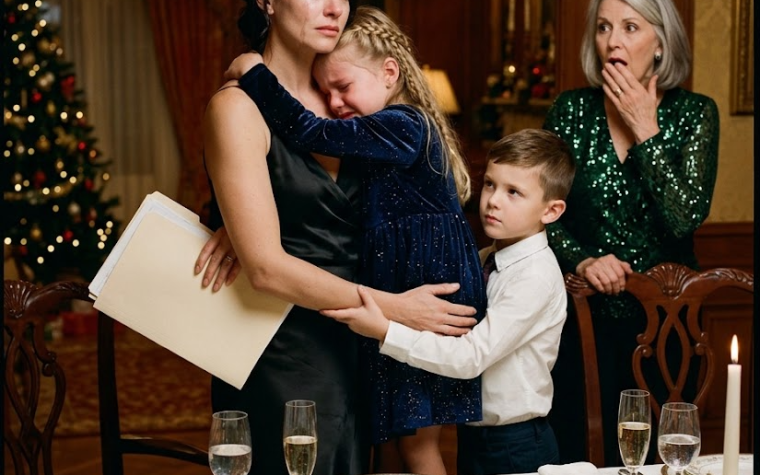
The first page carried a single handwritten line Donnie recognized immediately.
Don’t let anyone reduce a lifetime of connection to a number on a schedule.
The handwriting belonged to a longtime crew member from the earliest seasons of Blue Bloods, someone who had watched Donnie arrive before sunrise, stay after difficult scenes, and speak to nervous background actors as though each of them belonged at the center of the room.
Beneath the sentence were fifty-seven signatures.
The executive stared at them as if they were evidence against him.
Donnie turned the page.
There were photographs, letters, ticket stubs, production notes, charity acknowledgments, and messages from fans spanning generations.
Some remembered seeing New Kids on the Block for the first time.
Others wrote about discovering Danny Reagan years later with their parents or grandparents.
A newer group described following the character’s evolving story into Boston Blue.
Nothing in the folder was arranged like a publicity package.
It was too personal for that.
A faded concert ticket had been taped beside a handwritten note from a woman who said the music had carried her through a lonely adolescence.
A small photograph showed three generations of one family wearing blue at a television watch party.
Another letter came from a retired police officer who wrote that Danny Reagan’s courage, loyalty, and vulnerability had reminded him that strength did not require silence.
Donnie read without speaking.
The room remained still.
The executive recovered first.
“This is exactly what I was talking about,” he said.
“Sentimentality.
We have a show to produce.”
Donnie looked up.
“You knew about this.”
The executive straightened his jacket.
“I knew someone was wasting production time.”
The young crew member stepped forward.
Her voice shook, but she kept her eyes on him.
“We collected those messages after hours.
No production time was used.”
“You used company equipment.”
“One camera,” she replied.
“With permission.”
“From whom?”
The main monitor suddenly flickered to life.
A face appeared on the screen, followed by another, then another.
Fans were connected from living rooms, community halls, restaurants, hospital break rooms, rehearsal spaces, and quiet bedrooms across the world.
Some held blue balloons.
Others held old photographs or record sleeves with the printed details turned away from the camera.
Several simply waved.
The sound was muted, but their expressions said enough.
The executive moved toward the monitor.
“Turn that off.”
The camera operator didn’t touch the controls.
“I said turn it off.”
The stage manager raised the phone.
“They heard you.”
The executive stopped.
“Who heard me?”
“Everyone on the call.”
His face tightened.
Donnie closed the folder halfway.
The cruel words about age, nostalgia, and people who did not matter had traveled through an open production channel.
The audience waiting for a birthday greeting had heard the cake hit the trash cart.
They had heard the order to cancel them.
They had heard an executive dismiss decades of loyalty as an inconvenience.
Nobody on the monitor looked angry in the theatrical way he might have expected.