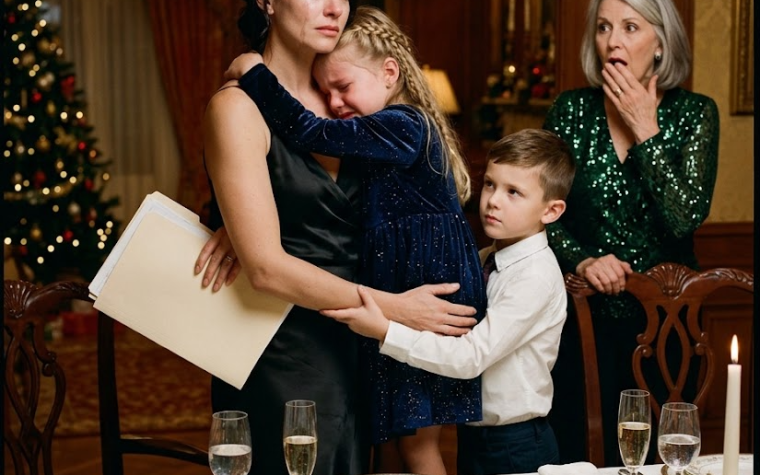
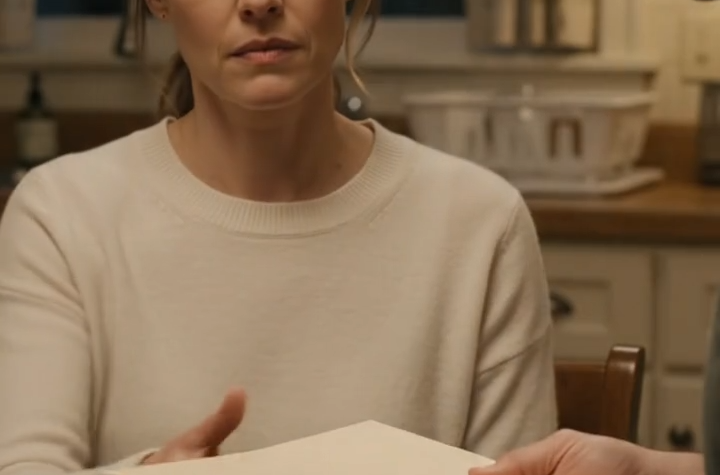
I noticed both.
I also noticed Felicia cleaning them before she left.
Later, when the house was quiet again, I stood beside the refrigerator.
My husband’s little flag magnet was still crooked.
For years, I had left it that way because moving it felt like disturbing something he had touched.
That evening, I finally straightened it.
Not because I wanted to erase him.
Because I understood something I should have understood much earlier.
A home can hold memories without becoming a museum.
A mother can love her family without becoming their employee.
And generosity means very little when other people begin treating it as an obligation.
The blue folder stayed in my nightstand.
I never needed to open it at another Christmas.
But I kept it anyway.
Not as a weapon.
As a reminder.
The night Felicia told me my house would someday belong to her, I could have shouted.
I could have cried.
I could have called relatives and built an army out of family gossip.
Instead, I checked the facts.
I gathered the documents.
I protected what was mine.
Then I allowed everyone else to experience the consequences of plans they had made without me.
The result was not revenge.
It was clarity.
And the following Christmas, when Felicia asked whether I wanted to host dinner, she didn’t bring a guest list.
She brought a notebook.
“Before I call anyone,” she said, “what do you actually want?”
I looked around my kitchen, at the counters, the oven, the old magnet, and the table where a blue folder had once changed the direction of our family.
Then I answered.
“Twelve people.
Everybody brings something.
Everybody cleans.
And nobody calls twenty-five people ‘only.'”
Felicia laughed.
So did I.
And for the first time in years, Christmas at Grandma’s house felt like a celebration instead of a shift I had forgotten to clock out of.