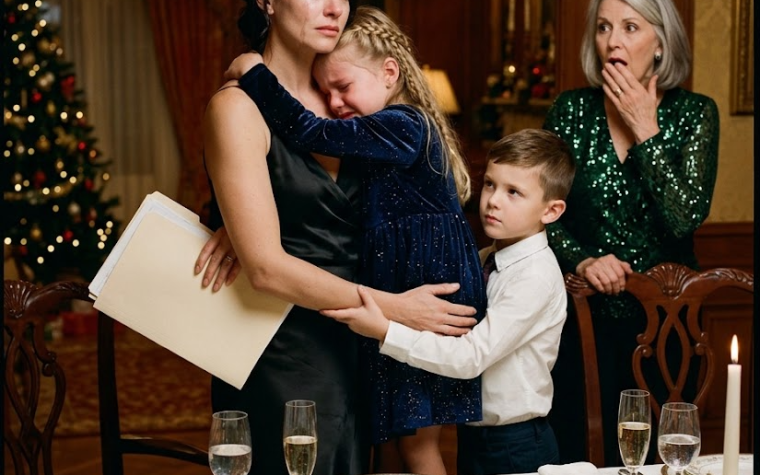
Dad was quiet.
Then he said, “You mean after you smashed the wedding cake?”
Nobody answered him.
It was such a simple sentence that I almost sat down.
Not because Dad had suddenly transformed into some perfect defender.
He hadn’t.
Growing up, he had expected more from me too.
A B from me had earned the kind of disappointment Bethany could dodge with a story about an unfair teacher.
But he had named the event without editing it.
Bethany smashed the wedding cake.
Mom said, “She was drinking.”
Dad answered, “I saw.”
“She was emotional.”
“I saw that too.”
“She didn’t mean—”
“She walked to the cake.”
Another silence.
That detail mattered.
Bethany had thrown the champagne in a burst of anger.
But after that, she had turned, crossed the distance to the cake, and put her hand into it while everyone watched.
There had been time to stop.
Emily had even said her name.
Bethany had continued.
Dad asked me, “Was the lease final?”
“No.
Management hadn’t countersigned the guarantor paperwork yet.”
“And the tuition?”
“Money I had set aside for her.
I stopped the transfer.”
He said, “Then it’s your money.”
Mom exploded.
“Oh, wonderful.
So now we’re all teaching her a lesson?”
“No,” I said.
“That’s the part you still don’t understand.
I’m not teaching Bethany anything.”
“What do you call this?”
“A boundary.”
The word sounded almost embarrassingly simple.
No grand punishment.
No revenge.
Just a line I had failed to draw for years.
Bethany said, “You’re enjoying this.”
I looked back at Emily.
Her expression told me she knew exactly how untrue that was.
I had imagined our first morning as a married couple differently.
Coffee.
Maybe breakfast downstairs.
Laughing over something that went wrong during the reception but had already become funny.
Instead I was negotiating with my family over whether humiliation was severe enough to justify control over my own bank account.
“No,” I told Bethany.
“I wish none of this had happened.”
“Then put it back.”
“No.”
“If you really loved me—”
I interrupted her.