The operation went as planned.
When I woke, Parker was not beside me.
Neither was Evelyn.
The room was dim, quiet, and mine.
Elena had placed the sealed note in the drawer near my bed.
The robe had been sent to a specialist cleaner at the hospital’s expense until responsibility for the damage was determined.
On the table stood a new vase of white peonies.
This time, the card said only: From the nursing team.
Rest peacefully.
Parker called seventeen times that evening.
Because his access had been revoked, the calls came to my personal phone rather than through the room.
I turned the device face down.
The next morning, he sent a long message calling the situation a catastrophic misunderstanding.
He said Bianca had been frightened, Evelyn had overstepped, and hospital staff had escalated a private matter.
He did not say he was sorry for giving away my room.
He was sorry that witnesses had seen him do it.
Bianca sent one message too.
She admitted that Parker had arranged her procedure under a different clinic name so no one in his social circle would know.
He promised private recovery and told her I would not arrive until the following day.
When her procedure was delayed, he said he would manage me.
That phrase stayed with me.
Manage me.
Not ask me.
Not respect me.
Manage me.
The hospital investigation confirmed that Parker’s family office had submitted the request.
Evelyn had used her donor relationship to pressure a junior administrator into issuing visitor credentials and allowing Bianca upstairs before final approval.
The administrator had assumed consent would be verified later.
It never was.
The hospital reversed every charge made to my mother’s trust.
Parker received the full bill for Bianca’s stay, nursing care, flowers, food, cleaning, and administrative review.
His and Evelyn’s donor privileges were suspended while the hospital examined whether they had used similar influence in other cases.
The false consent entry was referred to the hospital’s legal department.
No one promised dramatic criminal charges, and I did not need them to.
The documented record was enough.
Parker had spent years making every conflict depend on whose version sounded calmer.
Now the system had timestamps.
Three days after I returned home, he arrived with my favorite food and a speech about rebuilding trust.
He stood outside because I had changed the locks before leaving the hospital.
He said Bianca meant nothing.
I told him that made his choice worse, not better.
He had humiliated me, invaded my medical privacy, and spent my mother’s money for someone he claimed meant nothing.
Then he said Evelyn had pushed him into it.
I reminded him that his mother had not been the one standing beside Bianca’s bed telling me she needed comfort too.
He finally became angry.
He accused me of destroying our reputation over a room.
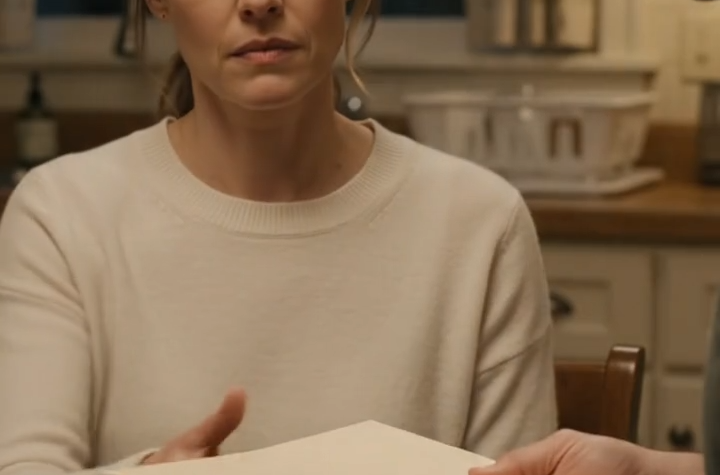
I placed a printed copy of the transfer request against the glass door between us.
“It was never about the room,” I said.
“It was about your certainty that anything belonging to me could become yours the moment you wanted it.”
I filed for divorce the following week.
Evelyn called it impulsive.
Parker called it punishment.
Bianca disappeared from his life as soon as the hospital invoices and compliance interviews began.
I called it documentation finally catching up with the truth.
Months later, I returned to the hospital for my final follow-up.
Elena met me near the private recovery floor and handed me a garment box.