His mother’s expression changed.
“What does the porch have to do with this?”
“The night before I fell, I asked him to shovel the snow.”
My husband interrupted immediately.
“That is not what happened.”
I looked at him.
“I asked you.
You said, ‘I’ll take care of it later.’”
He rubbed his forehead.
“I was busy.”
“And you never did it.”
“That doesn’t mean your fall was my fault.”
I hadn’t said it was.
He had supplied that defense himself.
His friend noticed too.
“So she asked you to clear the porch, you didn’t, she fell, broke her arm, and then you made her organize this party?”
My husband’s voice sharpened.
“I didn’t make her do anything.”
I almost admired how quickly the story was changing.
First, the party had been my responsibility.
Now nobody had made me responsible for it at all.
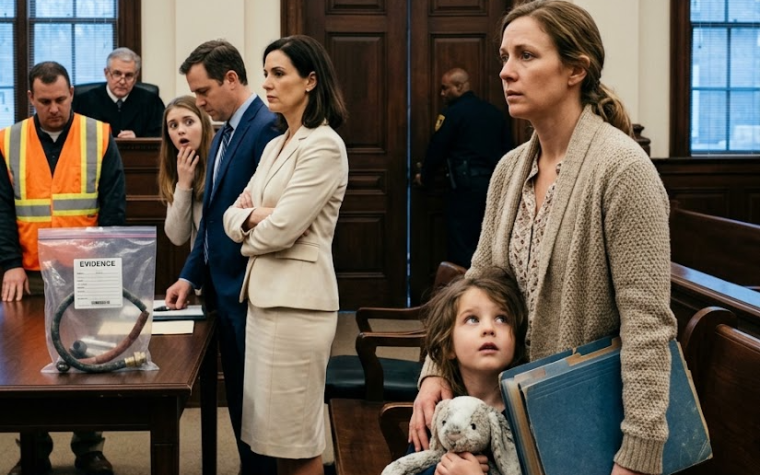
I opened the folder.
There were no dramatic secrets inside.
No hidden photographs.
No mysterious legal papers.
That was what made it so effective.
There were simply itemized records of labor.
Hours of cleaning.
Kitchen work.
Food preparation.
Delivery.
Setup.
The ordinary work that became invisible whenever I did it for free.
My husband glanced at the pages and then at the guests.
“You planned this whole little performance.”
“No,” I said.
“I planned your party.”
A few people looked away to hide their reactions.
I tapped the folder with my left hand.
“This is what your party required.”
He scoffed.
“Six hundred dollars? You got ripped off.”
I looked directly at him.
“Then it should be easy for you to do all of it yourself next year.”
The silence that followed was brutal.
His mother jumped in again.
“This is ridiculous.
Women have taken care of homes forever without demanding applause every five minutes.”
I turned toward her.
“You told me half an hour ago that if I didn’t try harder, my husband might start looking elsewhere.”
Her face reddened.
Several guests looked at her now.
She waved one hand.
“That was private advice.”
“You said it in the middle of a crowded room.”
“I was trying to help you.”